What is Digital Banking and How Does it Work?

Digital banking is the delivery of banking services through online and mobile channels, letting people handle their money conveniently and securely at any time and location. This article explains what digital banking means, how it works, and its key elements for fintech startup founders and entrepreneurs exploring the space, showing how these advancements improve user experience and safety.

August 12, 2024
What is Digital Banking?

Related solutions:

Definition Of Digital Banking

The digital banking definition is straightforward: it refers to the digitization of all traditional banking services, processes, and activities. In simple terms, it means everything a bank does, delivered digitally. Customers can access these services through online channels such as mobile apps, websites, and other digital platforms. This digital transformation enables customers to perform a wide range of banking functions without the need to visit a physical bank branch.

How Does Digital Banking Work?

How digital banking works comes down to combining technology with banking services to simplify and safeguard the customer journey. It consists of automation, artificial intelligence and strong security protocols working together to deliver an adaptable banking experience.

Core Components

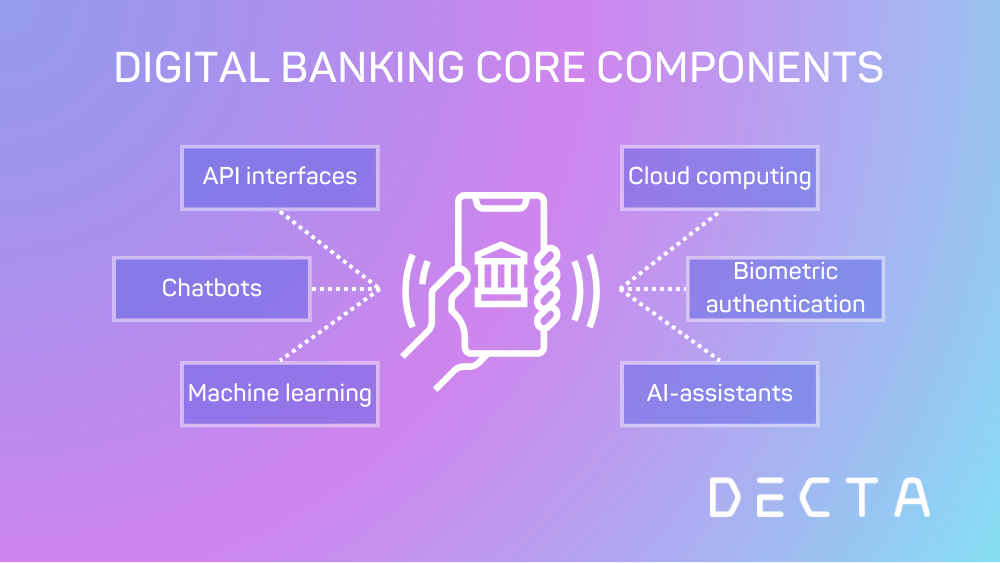
Online platforms and mobile applications enable users to manage their finances. Application Programming Interfaces (APIs) allow external services to link with bank systems, enhancing flexibility. Chatbots and AI-driven virtual assistants provide assistance and automate routine tasks. Process automation reduces the need for manual involvement, speeding up processes and minimizing mistakes.

Behind the customer-facing layer sits the core banking system, the back-end ledger that records accounts and transactions; how modern and API-ready this core is largely determines how quickly a bank can deliver digital services on top of it.

Automated KYC and customer onboarding complete the picture, verifying identity digitally so customers can open accounts fully online instead of visiting a branch.

Technological Infrastructure

The technological framework of digital banking is defined by collaboration between fintechs and banks. Cloud computing offers flexible solutions, while machine learning algorithms analyze data to anticipate user needs and enhance service provision. APIs facilitate seamless communication between financial systems, enabling fintech and digital banking to work together to deliver enriched service offerings. This collaboration also leverages technologies like facial recognition and advanced authentication to ensure security while optimizing the user experience.

In Europe, open banking regulation (PSD2) accelerated this model by requiring banks to expose customer data through secure APIs, which enabled account-to-account payments and a whole ecosystem of third-party financial services built on top of bank infrastructure.

Security Measures

Several layers work together to keep access secure:

  • Biometric authentication: methods like recognition ensure stringent access control measures are in place
  • Data encryption: safeguards information during transmission
  • Multi-factor authentication (MFA): guarantees authorized individuals can access data

Artificial intelligence is used to identify and stop fraudulent activity by spotting anomalies and monitoring transactions in real time. AML (anti-money-laundering) scoring works alongside fraud detection, screening customers and transactions against regulatory watchlists; it shapes how digital banks onboard and monitor customers.

Banks also rely on deposit protection schemes, such as FDIC insurance in the US, to ensure the safety of customer deposits.

Digital Banking Services

The way people interact with banks has been transformed by digital banking services, making it more convenient and accessible through apps and websites. Together these digital banking services cover everyday financial tasks moved fully online.

Payments And Transfers

Digital banking has made payments and transfers effortless. Customers can transfer funds, pay bills, and make transactions on their phones.

These services often come with contactless payment options and rewards for debit card transactions. Features like overdraft protection and real-time updates help users stay on top of their checking account balances to avoid ATM fees or other charges.

Loans And Credit

Applying for loans and managing credit has been greatly simplified by digital banking. Users can easily apply for loans, mortgages or credit lines using apps or online portals. Digital tools provide eligibility checks and real-time updates on the loan approval process.

Automated systems offer personalized loan options based on a customer's history and credit score.

Managing credit card accounts is also easier with features like alerts, transaction reviews, and bill payments. The availability of debt consolidation or loan refinancing options adds convenience.

Digital Wallets And Mobile Payments

Digital wallets, also known as e-wallets, have become increasingly popular.

Digital wallets seamlessly integrate with smartphone technology, allowing users to store their debit and credit card details securely. This enables payments through popular apps, like Apple Pay, Google Pay and Samsung Pay, facilitating contactless transactions with ease.

These wallets rely on tokenization, which replaces the real card number with a secure payment token, so merchants never see the actual card details; combined with authentication and encryption, this is what makes contactless and in-app payments safe.

Some also offer functionalities like storing loyalty points and tickets and enabling money transfers to loved ones.

Investment Services

Investment services let users manage their investment portfolios through mobile applications. Customers can easily buy stocks, bonds, mutual funds or other investment products. Real-time data analysis tools aid customers in making decisions, while automated investment advisors offer recommendations based on individual user profiles.

Furthermore, many digital banking platforms provide retirement planning tools to simplify tracking 401(k) or IRA contributions and projections. Users receive updates and notifications regarding market fluctuations and investment performance, which streamlines investment management.

Financial Management Tools

Digital banks offer a variety of financial management tools designed to assist users in managing their finances. These tools often include budgeting functionalities, spending analysis tools and the ability to set savings goals.

They automatically sort out expenses from checking and savings accounts, offering insights without requiring monitoring.

Individuals have the option to establish alerts for spending thresholds and monitor their advancement towards objectives directly through their smartphones. Additional features include automated transfers to savings accounts and previews of maintenance fees.

How Digital Banks Are Built: Digital Banking Platforms

Most banks and fintechs do not build this technology stack from scratch. A digital banking platform is a white-label technology layer that bundles the core components, from onboarding and KYC to accounts, card issuing, payments and compliance tooling, so a licensed institution can launch digital banking services without years of in-house development. For fintech startup founders, choosing between building and buying this platform layer is usually the first major infrastructure decision.

Launch Your Digital Banking Services

DECTA's Digital Banking Platform is a customizable, cloud-based white-label solution for banks and fintechs, covering onboarding, accounts, cards and payments in one stack.

Explore Digital Banking Platform

Digital Banking Vs Traditional Banking

Compared to traditional banking, online banking and digital banking differ in one fundamental way: digital banks operate exclusively online, whereas traditional banks are built around physical branches.

Traditional banks: offer physical branches where customers can conduct transactions in person. These institutions also provide online services, but their primary channel is face-to-face interaction.

Digital banks: are purely online, providing services through mobile apps and websites. They have no physical locations, reducing overhead costs.

Feature
Accessibility
Cost
Interest Rates
Services
Digital Banks
Accessible 24/7 from anywhere with an internet connection
Lower fees due to reduced operational costs
Often offer higher interest rates on savings due to lower operating expenses
Focus on seamless digital experiences with features like instant transfers and online bill payments
Traditional Banks
Branches have specific operating hours
May include fees for in-person services and account maintenance
Typically offer lower interest rates
Provide a mix of digital and physical services including cash deposits and face-to-face consultations

The Benefits Of Digital Banking For Consumers

Digital banking brings a variety of benefits to customers: convenience, cost-effectiveness and improved user autonomy.

Convenience And Accessibility

Customers can manage their bank accounts from anywhere and at any time using either a computer or a mobile device. This round the clock access means they are no longer restricted by banking hours or physical locations.

Mobile banking applications allow users to carry out transactions, check their account balances, and handle their finances effortlessly. Moreover, online banking often includes features like deposit capture and online bill payments, reducing the need for in-person visits.

Time-Saving

One of the time saving benefits of digital banking is the elimination of time consuming visits to physical banks. Tasks that previously required being physically present, such as transfers, deposits and bill payments, can now be swiftly completed online within minutes.

This efficiency also applies to services like loan applications and account management, which can be processed quickly and digitally. Automation and recurring payment setup remove repetitive manual tasks entirely.

Enhanced Financial Monitoring

Digital banking enhances the monitoring of finances by offering real time access to account details. Users can keep track of their spending habits, check account balances and receive notifications for transactions.

This instant feedback assists individuals in managing their finances. Swiftly identifying any suspicious transactions. Various online banking platforms provide budgeting tools and financial planning options complemented by aids such as graphs and charts.

Cost Savings

Cost savings represent another advantage of digital banking. Users can enjoy minimized transaction charges, higher interest rates on savings accounts and lower loan interest rates.

Moreover the elimination of paper statements and face to face visits reduces expenses related to postage, printing and travel.

Personalization And Control

Digital banking platforms frequently provide tailored services that grant users control over their undertakings. Advanced algorithms analyze user information to deliver recommendations for saving, investing and spending.

Numerous platforms allow users to establish objectives and monitor their progress towards achieving these goals.

Customized dashboards and alerts keep users up to date. Empower them to make financial choices.

Financial Inclusion

Digital banks can reach out to rural communities that may lack access to traditional banking services.

This accessibility allows individuals to perform banking tasks, such as opening accounts or transferring funds, without facing obstacles.

Integration With Other Financial Services

Another key benefit of digital banking is its integration with other financial services, making choosing a digital banking platform an important consideration. A platform that connects seamlessly with third-party services like investment options, insurance products, and budgeting aids can significantly enhance the user experience.

This integration enables consumers to oversee various aspects of their finances through a single interface. For instance, users can monitor investments, pay insurance premiums, and track expenses all within one app.

Examples Of Digital Banks

Digital banks such as Revolut and Monzo show what digital banking looks like in practice. These are neobanks, also called challenger banks: licensed or partnered financial institutions that operate with no physical branches at all, making them the clearest embodiment of the digital banking model.

Revolut

Revolut, a known neobank has transformed the banking landscape by offering its services through a mobile app. Users can easily open bank accounts without the need to visit branches.

Some standout features of Revolut include the option for currency accounts, which enables users to hold and exchange various currencies at favourable rates.

Additionally, it offers tools for budgeting, real-time spending alerts and opportunities to invest in cryptocurrencies and stocks.

Revolut also offers security measures like virtual cards for secure online shopping and extensive insurance coverage.

Monzo

On the other hand, Monzo stands out as another challenger bank that provides a completely digital banking experience focused on transparency and customer satisfaction. Operating exclusively through its application, Monzo offers features designed to simplify management.

Monzo provides transaction notifications, insights into spending patterns, and tools for budgeting and saving money.

Customers have the option to allocate funds into designated "Pots" for objectives. Can automatically save leftover change by rounding up transactions.

Monzo's focus on customer satisfaction is evident through features like a clock in-app chat support and the ability to instantly freeze a card. Additionally the bank offers interest earning accounts. Has recently added loan and overdraft services to cater to a range of financial requirements, for individuals.

Brick-and-Mortar Banks and Credit Unions operate in much the same way as traditional banks, with physical locations and a wide array of in-person services.

Both models remain viable depending on customer needs and preferences.

Take Your Banking Fully Digital

DECTA provides acquiring, issuing and processing infrastructure trusted across 32 countries.

Talk to our team